[No] Bad Cards: Theban Nightmare (Part 1 of 2)
This article begins a series exploring underutilized Goat Format cards, starting with Theban Nightmare and its challenging deckbuilding requirements for winning without a hand or backrow.

Welcome to [No] Bad Cards, a new series that seeks to challenge, or confirm, the assumptions around cards seen as difficult to use profitably in Goat Format. Each article will consist of three sections: a background section explaining the reason the card was chosen, a section dedicated to the theory driving a proposed optimal utilization of the card and the deck formed from it, then, finally, a section detailing the results of testing in competitive environments and deckbuild changes that followed with explanations of those as well. Submissions welcome!
Episode One: The Theban Menace
BACKGROUND
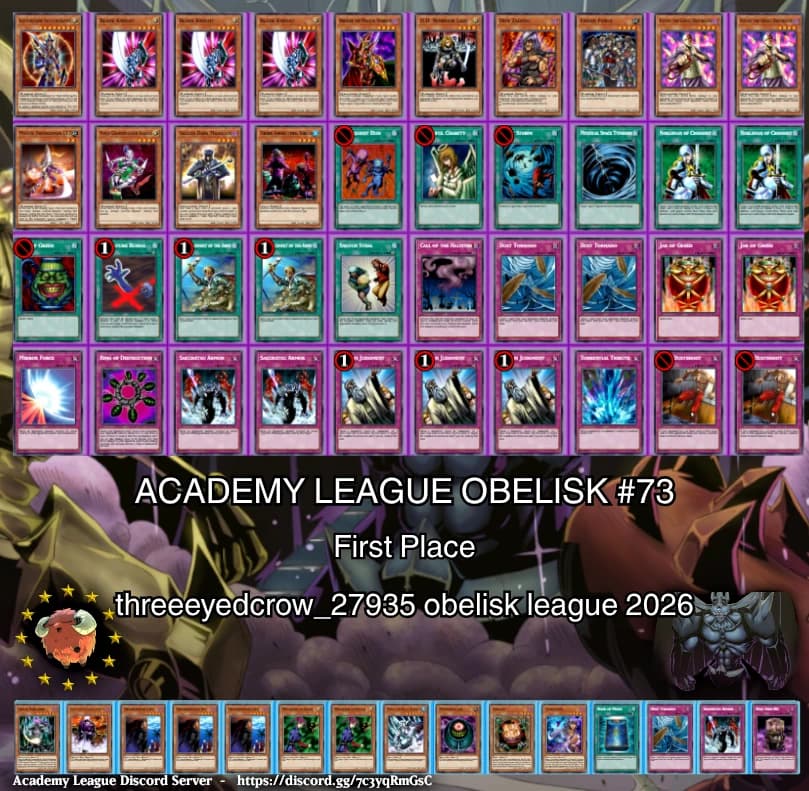
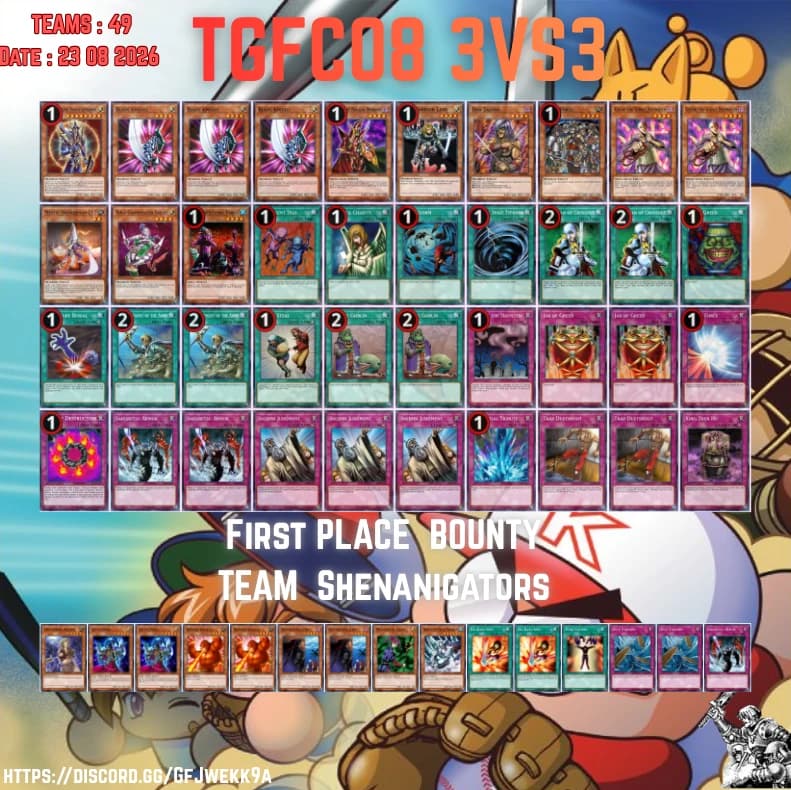
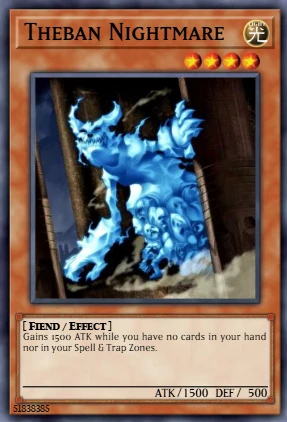
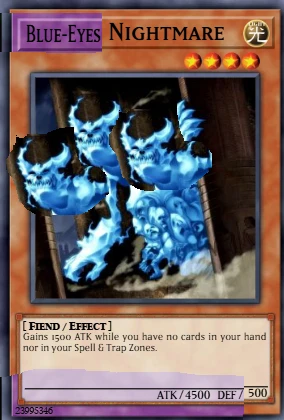
Some cards stay with you. Theban Nightmare is a card I’ve been trying to build around ever since I saw it in the Ancient Sanctuary bulk back in the day. LIGHT? Fiend? Sangan target? What? It’s a Level 4 Blue-Eyes White Dragon, in the right conditions! How could you not get excited about a card like that? The drawback of having to keep an empty hand and clear Spell and Trap card zones is intended to deter its use outside of rare circumstances, but just as obviously, as a card game nerd, the rarity of circumstances is something we have influence over, at least starting from the Deckbuilder. But how do you build a deck that wins without a hand or backrow? How do you adjust your play style to make that kind of thing work? How can the opportunity cost lost from not using Snatch Steal, Premature Burial, or Call of the Haunted be made up for?Well, I did pretty decently with a deck not too dissimilar from that in a Regional tournament in like 2004 or 5, I forget exactly, but my buddy and I threw it together the night before. Important to note that events were much smaller back then, I think this one had around 125 people. My Zombie Warrior deck started crumbling in practice with my teammates the night before the event, so I looked at what else was in our cardpool with a frantic eye all while one of the strongest players of any game I’ve ever known guided me in its construction. We all know that one player, that if they still played Goat, they’d be *the* GOAT–that caliber of player. We came out with Blade Knights, Flash Assailants, Swift Gaia The Fierce Knight, and lots of one-for-one cards like Bottomless Trap Hole, which technically isn’t but functionally is. It was a simpler time. In principle this should sound familiar, as a modern competitive deck with vaguely this vibe exists now in Goat Format, innovated relatively recently in the game’s long history but well-refined and a far cry from my old shoebox pile. That pile burned itself into my brain however, and we live in a post-Jirai Gumo world, thus we must seek to go even further beyond the 2200 ATK challenge issued by Ez2Slayu.
THEORYIOH! AND DECK
The real deckbuilding challenge concerning Theban Nightmare is deciding how to both support it and win without it. Cards that sit in your hand or on your field for more than a turn are actively hurting your secret weapon, so everything must be as “live” as possible, to steal more wisdom from those generous enough to share it in Discord regarding the secret to the effectiveness of the unrelated but also tempo-focused Chaos Warrior deck. Cards that go negative in terms of card advantage are actually beneficial to an extent, over any card that can spend a significant amount of time dead for certain, and since those same cards will be amplifying the ATK points of my monsters one way or another, we are encouraged to select very uptempo cards in those slots. Back to Square One is theoretically easier to use than Nobleman of Crossout, for example, since it is removal totally apathetic to the battle position of the monster it targets and BTS1 reduces our hand size by an additional card further.Blade Knight was an obvious anchor point for the low-resource game rewards we were seeking, and so this was always going to be some kind of Warrior deck, a Blade Knight deck more than anything. Critically, players in the Discord had discussed the value of Jar of Greed in Warrior decks, as a method of storing in-hand resources on the field temporarily with low risk so as to play into Blade Knight’s hand limit for a necessary battle phase. This framing caused me to examine another piece of technology differently.
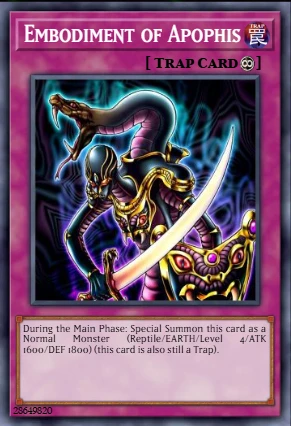
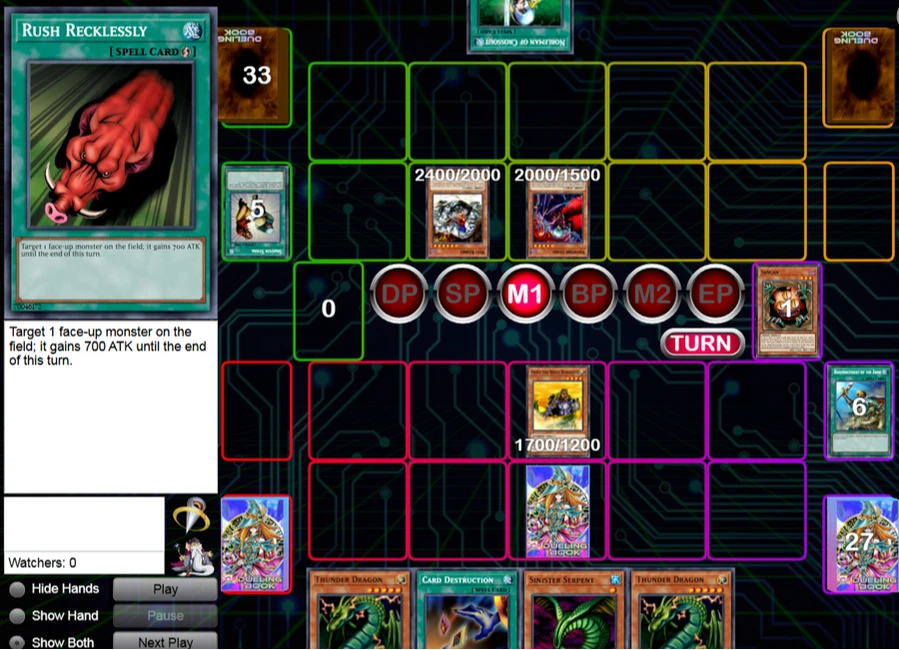
As I was searching the goat questions channel on the Discord for things related to Embodiment of Apophis, I found that in 2024 someone had asked a very interesting question. Does Embodiment occupy a Spell or Trap card zone after it resolves and summons itself to a Monster card zone? The answer: no, but it does forbid the use of the Spell or Trap card zone it came from. [EDIT: the answer in Discord is incorrect, Apophis is considered to occupy a Spell and Trap card zone in Goat, meaning you can ignore the rationale for playing this card over something like Gilasaurus perhaps]. Asked in the context of Theban Nightmare no less, the ruling revived my interest in this deck. This meant I now had the Theban Nightmare equivalent to Jar of Greed, kind of. Putting resources in hand would be no good, but moving them to a monster zone and turning them into extra damage or defenders, that has value.The relatively obscure (within the format) Trap-Monster was released at the tail end of the format and thus a lot of historical data about it just isn’t there. The last time it made an appearance on the Goat Format competitive stage was as a tribute summon accelerator in Riksaah’s 2024 Worlds thunderclap build, which I’ve come to refer to as “snakeclap” if for no other reason than because Yu-Gi-Oh! players love goofy names and hair-splitting. So, the card seemed more trivia than triumph, mere tribute fodder. Then I played with it. Even within the context of a list in which it primarily exists to turn Trap cards into Zaborg the Thunder Monarchs, I found it to be an insane tempo addition. An extra 1600 ATK monster on your turn can make the difference in a lot of situations, and damage from it accumulates relatively quickly, assuming it taking out weaker opposing monsters to free up direct hits for larger compatriots isn’t happening.Card disadvantage needs to be carefully managed. There are lots of great cards that put you behind in cards (less oxymoronic than it sounds, consider high-impact cards like Cold Wave), so when it came to card selection we are doing as much as we can during Main Phase 1 to make sure that our Blade Knights and Theban Nightmares are at maximum power, while keeping our slower-to-utilize but reactive-on-opposing-turn options either strong enough to warp the game or highly flexible. This biases us away from too many Trap cards as well, favoring Spells, and this is deck design that is compatible with Theban Nightmare (as is only using a pair of them, for now).Raigeki Break is an excellent option for a variety of situations that can occur on your opponent’s turn (Snatch Steal comes to mind), while Back to Square One is an underrated removal Spell that doesn’t fuel opponents’ Graveyards and sets the opponent back on tempo in two facets. Harming your opponent’s summon economy by removing a monster is nice but any one for one card like Smashing Ground could work almost as well for that purpose. Chosen over Tribute to the Doomed, BTS1 collapses the unpredictability of their next draw into something known and sets them back a turn in terms of seeing cards. Seeing more cards than our opponent is pretty good for a deck that values speed. Of course, we won’t always have a Theban Nightmare or benefit most from it being at full power at all times, so discard outlet abundance means a lot of cards that pitch will be pitched in a game.I think even if a deck wants card disadvantage as a premise, it should optimize the tools available for getting the most value out of dumping your hand, which leads sometimes to plusing; if you’re doing that by accident you’re on the right track. Rush Recklessly is an underrated way to trade a card for a monster, or deal more damage, but as a Quickplay Spell its best trait is that it can be played from hand during the Damage Step of your turn, potentially making your Blade Knights go to 2700 ATK (well able to negate face-down Spies or simply run over Mobius) or your Theban Nightmares to 3700! The ”should I use my battle trap on Theban Nightmare while my opponent has one card in hand?” mind game is real. A Sakuretsu activated due to knowledge of Rush Recklessly will still allow you to preserve the Rush Recklessly for another monster. We want our opponents to face difficult choices or we’re not doing our job.Freed The Brave Wanderer lets us get some removal to make up for our missing Exiled Force (against all recommendations I find it here to be anti-tempo, I value the normal summon that much since we have so much other removal [this take, hilarious in retrospect]) and makes use of our LIGHT monster abundance, comboing with Rush Recklessly on opposing monsters at times to hit weaker monsters it normally couldn’t, like recruiters, D.D. Warrior Lady, or even Sasuke Samurai #4. Mirage Dragon is included as well to make up for the lack of steady Spell and Trap card removal that isn’t Raigeki Break, and because if there is any deck the 1600 ATK LIGHT monster could succeed in, it would be one with three copies of Rush Recklessly in it; Rope of Life takes the “mini” part of “mini-Jinzo” away, as well, giving us a 2400 ATK monster immune to battle Traps with a timely activation.And so, inspired by “Gumo Sumo”, in which Theban Nightmare is our Jirai Gumo and Swift Gaia The Fierce Knight stand-in, I present “Nope Rope”, a deck that coincidentally just happens to have a lot of serpentine cards in it, and further reason for the name, the card Rope of Life is used as well:
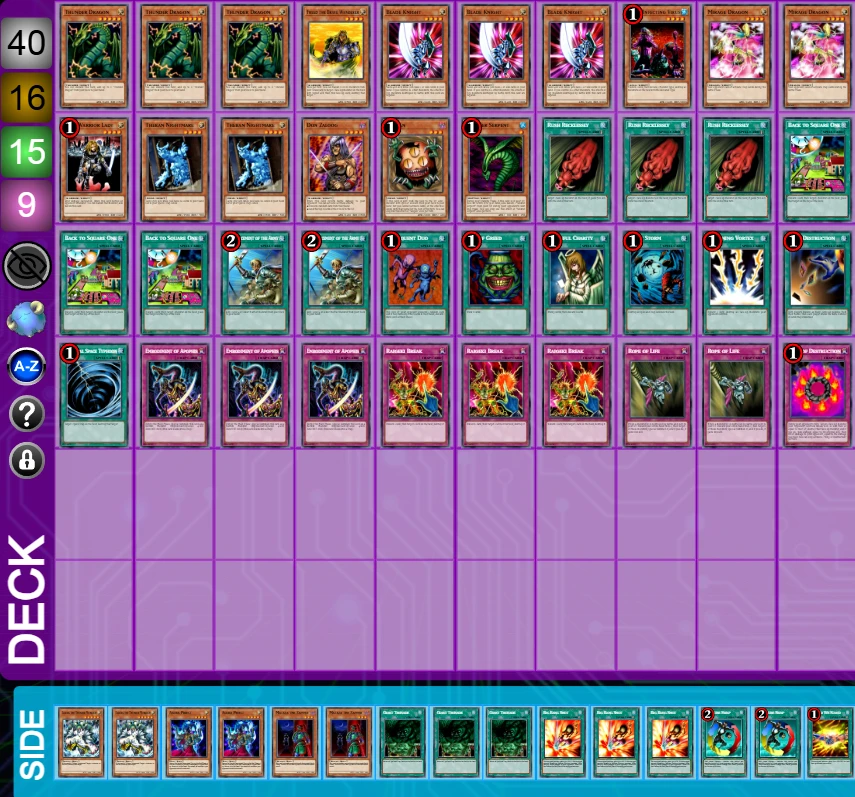
I ran some prototypes of this list past Alderoth at different times. He reminded me to use Don Zaloog if I’m going into Rush Recklessly in such high amounts with Reinforcement of the Army in mainboard and also that Sinister Serpent works excellently with Rope of Life and Theban since you can always meet hand minimums for cards like Rope or BTS1, but getting it out of your Graveyard at all is totally optional, so there’s no worry of turning off your Theban with monster clog. Rope of Life is also pretty sick for activating Theban. Normally you would ram Giant Rat to fetch Injection Fairy Lily or Pyramid Turtle to get a Ryu Kokki or something, but here we can get a 3800 ATK monster by ramming a 1500 into something. If somehow you had both Rush Recklessly and Rope of Life face-down the previous turn, you’re looking at a Level 4 monster with the strength of the Blue-Eyes Ultimate Dragon we don’t have.
The sideboard is pure theoryioh! A Zaborg pair completes the Apophis trio, giving you a blowout option against slower decks, which is theoretically most of them, but specifically ones where a lot of monsters are Set. A pair of Asura serve as sheep token-clearers and Swap targets for additional theft options for dealing with face down monsters. Mataza can also work to clear sheep tokens and can get under common floodgates while being a RotA target to boot! Trunade is at 3 to make sure we get our killshot turns, and it’s not a bad way to go minus with this deck. Funny trick though, to Swap an Apophis and then play Trunade. Big Bang Shot has more Trunade synergy as an extra source of removal while also punishing sheep tokens and bluff Sets. Asura + BBS OTK is rare these days but with Scapegoat stonks on the rise every day it might not be for long. Creature Swap is for the aforementioned shenanigans, otherwise just another form of removal that doesn’t care what the battle position of the opponent’s monster is. United We Stand is for Mataza, because if your 55 is basically a concept car with yata88 rims on it, you might as well lean into it.Could Black Luster Soldier - Envoy of the Beginning fit in this deck over say, Freed, if Pitch-Black Warwolf, Mirage Dragon’s DARK twin, was used instead? Yes, but would the extra brick factor be tolerable given the high number of discard outlets? Probably also yes. But I’m looking for maximum consistency, not a level 8 monster with a summoning condition to chill in my hand for x turns.How does it operate? Well, it’s interesting to play and has some serious steamroll capability, and seemed to handle Zombies better than a normal Warrior deck would. Competition would be needed to find out, as beating a random player on duelingbook proves you beat a random player on duelingbook. We have a little more to prove than that, so, tournament time.
RESULTS AND MODIFICATION
To be concluded in Part 2.-C.G.