"Who's Winning?" - Goat Format Fundamentals
This article revisits a 2010 piece on evaluating gamestates in Yu-Gi-Oh!, updating it to reflect the Goat Format metagame and emphasizing that winning is determined by more than just life points.


Author's Note: My article titled "Who's Winning?" was originally posted to The Game Academy's article hub (now defunct) in 2010. It became one of the most praised pieces of my article writing career for the way that it illuminated the both the most basic fundamentals of the game as well as the factors that should be used to evaluate a gamestate. This article has been given some contextual updates from its original form to reflect the Goat Format metagame.
Who's Winning?
The question, "Who's winning?" is one of the most important questions in the history of Yu-Gi-Oh! Not just Yu-Gi-Oh! actually, but games in general. Just for the sake of clarity, saying, "Who's winning?" is actually a short way of saying, "Based on the current state of the game, which player has a higher probability of winning the game?" The longer version of the question certainly sounds a bit more complicated. The question itself makes a rather strong implication: The current state of the game correlates with winning the game. I first started playing Yu-Gi-Oh! back when Magic Ruler was the most recently released set. Virtually no theory had been developed at this point, so one could say that everyone was quite bad at the game. I occasionally attended local tournaments, and there would be spectators who would walk by and ask, "Who's winning?" Can you guess what the common responses were? "I'm winning by 1000 lifepoints." "I’m losing by 3000 lifepoints." "The game is tied at 4000 lifepoints." The Yu-Gi-Oh! rulebook clearly explains that lifepoints are used to keep score of a game. So whoever has higher lifepoints is more likely to win, right?
Who Need Scoreboards Anyway?
Your friends are off watching the a football game in another room. In your room, you're on the computer doing something much more entertaining (like playing some DuelingBook). You're still waiting on your opponent to take his turn, so you shout to the other room, "Hey, who's winning the game?" They tell you that the Packers have 17 and the Steelers have 14. Which team is more likely to win? Based on the information you were given, the Packers are more likely to win; they have a higher score. However, your friends failed to mention that the Steelers have possession of the ball, it’s 1st and goal, and they're on the three yard line. Given this new information, which team is more likely to win? There’s a strong chance that the Steelers score a touchdown and pull ahead. It’s easy to make the assertion that the Steelers are in fact winning despite currently holding a lower score. Although in most sports we assume that the team with the higher score is more likely to win, there's more to any sport than just a score. You have to consider other factors such as how close each team is to scoring additional points, which team was favored to win initially (the "matchup" as we call it in TCGs), and which players were injured during the game. When attempting to predict anything, whether it's the stock market, the result of an election, or what your mom is making for dinner tonight, more information results in a more accurate prediction.
Card Advantage: A New Scoreboard
All of what I just said is fairly intuitive, and yet no one had really considered any of this when the game was young. We were stuck in the foolish mindset that lifepoints were the dominating factor in determining which player would win the game. What we needed to do was invent a new scoreboard, one that better predicted who was more likely to win the game. The theory of card advantage was first proposed as a mindset for deckbuilding and optimal play for Magic: The Gathering in 1995. It was eventually ported over to Yu-Gi-Oh! as well. Few players resisted this new system; they enjoyed seeing a new outlook on the game. The theory of card advantage taught players that using mass removal on one monster was usually a bad play; wait until you get that juicy 2-for-1. Divine Wrath and Monster Reincarnation both had good effects, but the inherent card disadvantage made them deemed nonviable. In 2005, Goat Control was built to be a deck centered almost entirely on the theory of card advantage: Count up the number of cards that both players control (field + hand). Whoever has more is winning the game. "Take that card out; it’s a -1." "That deck is bad. You have no card advantage." "How do you expect this deck to out-card-advantage Goat Control?" These were common posts on the forums in 2005. However, when looking at the Goat Format metagame, it’s not just as simple as card advantage is good, card disadvantage is bad. Phoenix Wing Wind Blast sees play despite being card disadvantage. Salvage is straight up card advantage, but does that matter if the rest of your deck is filled with bad cards?
Aggression in Goat Format
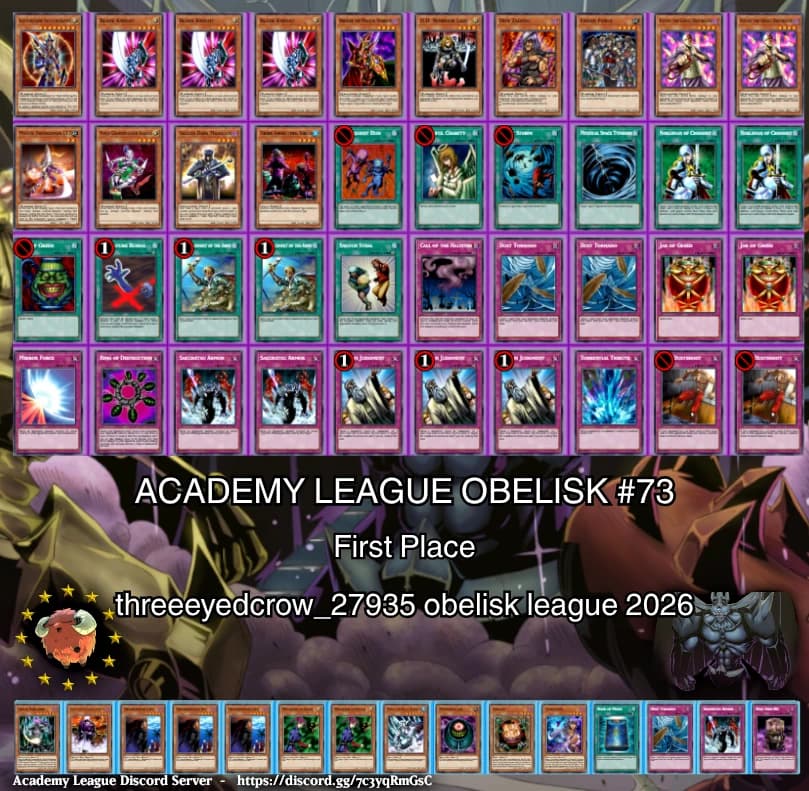
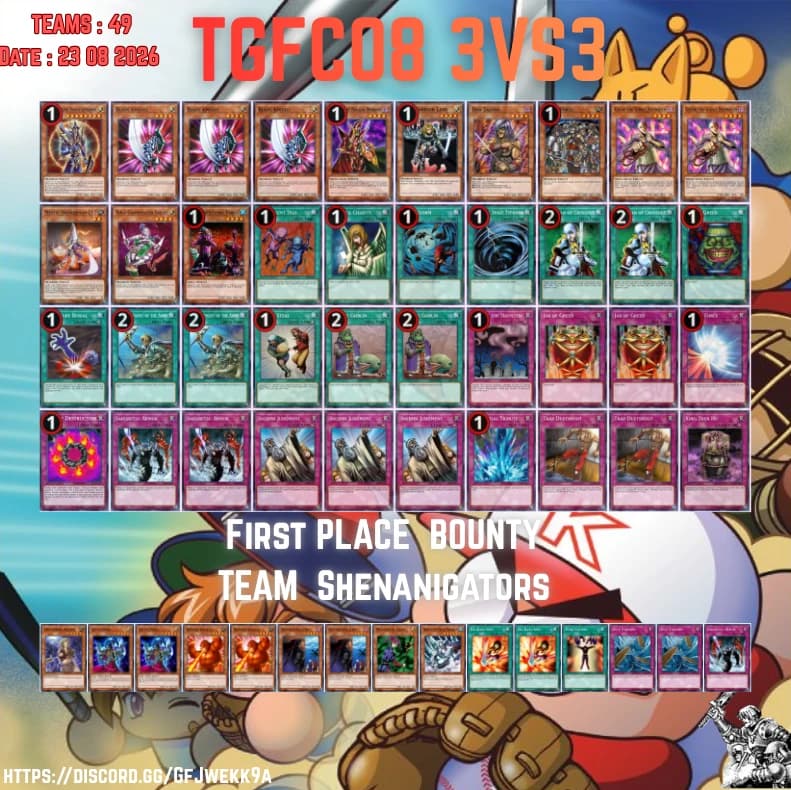
Historically speaking, card advantage has always been highly valued in Goat Format, but so have aggressive monsters. Berserk Gorilla is a classic aggressive choice in the format as the highest attack no-tribute monster with negligible downsides. Cards like Abyss Soldier, Asura Priest, and D.D. Assailant have been popular Goat Format choices as well for the way that their aggression can pressure an opponent while also doing well on the card advantage front. Anti-Meta Warriors offer another perspective on Yu-Gi-Oh! theory. When constructing this kind of deck, outside of staples like Pot of Greed, there is little concern for filling out your deck with inherent card advantage like Chaos Sorcerer or combos like Tsukuyomi + Magician of Faith. But it’s not fair to say that an Anti-Meta Warriors player doesn't care about card advantage. During gameplay, it was certainly a priority to make sure than the control player did not acquire too many cards. The fundamental difference becomes apparent when you look at the battles being fought. Conventional control decks were fighting a battle over card advantage. Cards were the only scoreboard, whoever had more was winning. Anti-Meta Warriors makes them fight a war on two fronts; they had to gain card advantage without taking too much damage as well. The theory of card advantage had become so popular that players were only used to playing control vs. control matchups. This made playing a highly aggressive deck like Anti-Meta Warriors a solid option. Smarter players began to question whether switching scoreboards was really a good idea. Lifepoints weren't the best way to keep score. Card advantage wasn't the best way to keep score. The best way to keep score is to consider both. Both cards and lifepoints are relevant in almost any matchup.
Is Aggression Its Own Card Advantage?
What's so surprising about watching Anti-Meta Warriors is how often they will be leading the game in card advantage vs a control deck despite explicitly not being built to gain card advantage at all. How exactly does this happen? Facing aggressive pressure forces a control player to make plays that they would not ordinarily. They might Book of Moon a Berserk Gorilla to save them from taking 2000 damage despite the fact that this is a -1. They might use Metamorphosis with Magician of Faith, hoping for a Thousand-Eyes Restrict to buy some time, only to get it countered by a 2-for-1 Solemn Judgment. They might use Scapegoat to block damage, only to have the tokens cleaned up by Asura Priest next turn. In a recent Goat Control mirror, I saw a player pay 3000 lifepoints to use Graverobber on his opponent's Delinquent Duo. After he did this play, I commented that it would be unlikely for him to win the game. This dropped him to 2700 lifepoints, a fundamentally different value from his previous 5700 lifepoints. This makes his opponent's Ring of Destruction, Black Luster Soldier - Envoy of the Beginning, Airknight Parshath, Tribe-Infecting Virus, Asura Priest, Call of the Haunted, and Abyss Soldier much better. On the surface, you've just gotten a +1, but your reduced lifepoint count has changed the relative quality of future draws on both sides. Surely enough, the Graverobber user saw his opponent shift to a more aggressive stance and lost the game afterwards. In Goat Format, you need to pay attention to your lifepoints just as carefully as you do the card counts. Once they fall into dangerous zones, this requires you to start getting more defensive, limiting your viable options. This makes lifepoints its own card advantage in a way.
Relative Values of Lifepoints and Cards
After realizing that lifepoints and cards were both resources that needed to be valued, players began to ask themselves, "How do we equate cards and lifepoints?" If players start with 8000 lifepoints and five cards, can we then reason that one card equals 1600 lifepoints (8000/5=1600)? Well wait, during a turn each player acquires an additional card and no additional lifepoints, so we can't simply compute a ratio based on the starting totals. So if someone Magic Cylinders a 1600-attack monster, is that an even exchange, a favorable exchange, or an unfavorable exchange? It’s entirely situation dependent. There once was a running joke in Yu-Gi-Oh! that when your opponent is at 200 lifepoints and you're topdecking, you'd say, "I hope I topdeck Sparks right now." In this gamestate, Sparks is strictly better than Pot of Greed, and any source of damage would be more valuable than all of the card advantage in the world. However, it’s obvious that Pot of Greed is better than Sparks in the opening hand. The values of cards and lifepoints (relative to each other) change depending on the matchup, the stage of the game, and the current values of both. So why we can't just find a simple ratio between cards and lifepoints? How many kilograms are in a meter? The question doesn't make sense, right? Kilograms and meters are two different units. Kilograms are used to measure weight, whereas meters are used to measure length. Likewise, cards and lifepoints are two different units. Someone trying to equate cards and lifepoints has the wrong mindset. Cards DON’T equal lifepoints! Understanding which is more important in a given situation is the correct mindset. A good player knows to value cards against a Chaos Control deck and lifepoints against a Burn deck.
Other Goat Format Scoreboards
Cards and lifepoints are not the only resources worth playing attention to in Goat Format. With Chaos Sorcerer seeing more and more play, we see the graveyard increasingly becoming an important resource as well. Losing via deckout is not unheard of in the format either, which means that deck counts can also serve as an important scoreboard. The mark of a great player in any game is someone who knows which resources to value in each gamestate. In what is often called "the game of the century" in chess, 13-year-old prodigy Bobby Fischer won the game by sacrificing his queen in order to position himself for a checkmate some 20 moves later. What made his play so brilliant was how he recognized that his queen, traditionally the most important piece in a game of chess, should be sacrificed so that he could prioritize more important goals. You must become a Bobby Fischer of Goat Format if you want to reach your highest potential as a player. Get into the habit of inquisitively examining gamestates and determining which resources should be leveraged and which should be sacrificed. It may be cards, lifepoints, graveyards, or something else entirely.
You might also like...
Once you've mastered the fundamentals behind who's winning, you might want to learn about risk. Check out Risk in Goat Format.
ACP
ACP is a co-founder of GoatFormat.com, along with Skully. He has been an active contributor to the revival of Yu-Gi-Oh!'s Goat Format from 2012 onward. In 2017, he created the Angel Chaos deck, a notable contender in the Goat Format metagame. He has a long history of being a TCG content creator, first for The Game Academy (now defunct) and later for GatheringMagic.com. He has placed in the top32 of the Yu-Gi-Oh! Championship Series three times. A mathematician by profession, he is known for his logical and analytical approach to gaming.