A Deep Dive into Dimension Fusion Turbo
This article discusses the re-emergence and strategic breakdown of the Dimension Fusion Turbo deck in the current Goat Format, highlighting its evolution from older formats and its unique playstyle.

There has been a lot of talk about Dimension Fusion Turbo since the release of Skully and Dale Bellido's Goat Format Tier List. We are lucky to have a guest writer today, Benjamin Wattam who is going to break down the deck. Check it out!
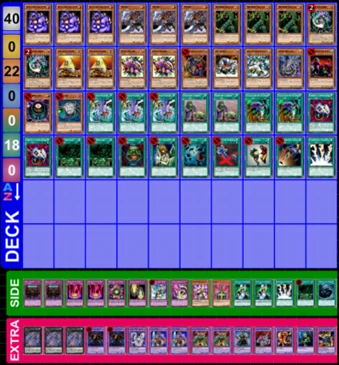
HistoryTo date, DFT has had difficulty finding its place in Goat Format as its draws on concepts only realised in hindsight – such Bazoo Return from 2007 and Diamond Dude Turbo (DDT) from a similar period. However the lessons from these decks have largely been funneled into the ever-popular Reasoning Gate deck that I’m sure everyone is well-acquainted with. Because of this DFT was not on many people’s radars, but has recently gained attention, even taking a top-tier position in Skully and Bellido’s recent tier list video.This style of deck was also seen way back in the now defunct Newgioh format. In the first major Newgioh tournament held in 2015 in Edison, the Bazoo Zombie variant below emerged as the winner.
This deck handles two often competing concepts much more consistently many other decks – the ability to actively play under its own steam, as well as the ability to explode into incredible board states and damage thanks to powerful combinations such as Lightning Vortex, Giant Trunade, and Dimension Fusion. Very shortly after this event an emergency ban list was dropped in Newgioh that banned Dimension Fusion.However, the comparison of this list and what is available in Goat Format is not a short leap to make. Partly because of this, coupled with an over fondness for early formats, fellow duelist and I (shout out to Ehren Holland) set to work creating and optimizing our own strategy that is viable in Goat Format.CreationAlthough we initially started with a more linear, OTK focus excluding everything that didn’t enable an OTK (such as Delinquent Duo, and Mirror Force) instead favouring OTK-focused cards such as Cyber Stein, Injection Fairy Lily, and Upstart Goblin, we quickly realised that this wasn’t just necessary, but even hindered one of the biggest advantages of the deck – the ability to actively play (and win) without requiring the commitment to an OTK. Because of this, we moved forward with three core principles:
- Avoid the randomness of Reasoning Gate decks;
- Actively play without relying on an OTK; and (above all)
- Limit the possibility of brick hands that are typically synonymous with this strategy.
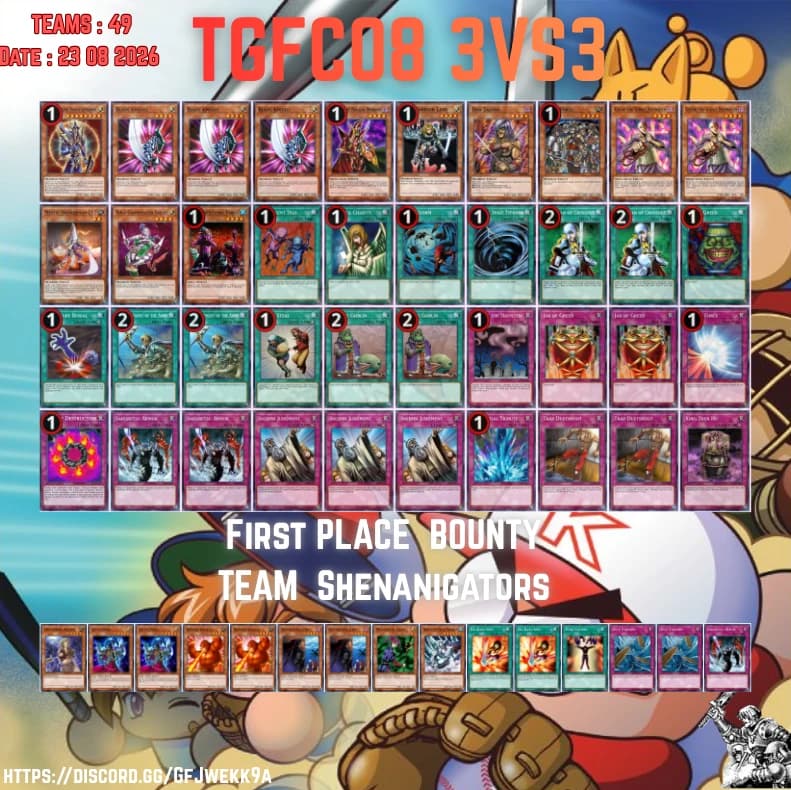
After much testing, we eventually arrived on the below list.
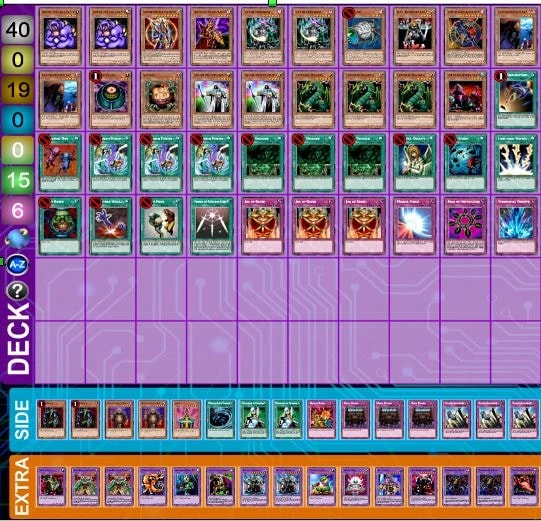
There’s a lot to look at here between a variety of cards at one, two, and some few three of’s. Because of this, context will be given to the choices made.Card Analysis – MonstersFirstly, despite being the namesake of “Bazoo Return”, Bazoo the Soul Eater is only at two. This is because there are three other monsters that require monsters in the Graveyard to summon – which can risk over-banishing. Further, the continuous effect of Dark Magician of Chaos bypasses the graveyard also negating the need to banish so many monsters.Also, as there’s only five monster zones, you’ll often not be able to summon all the monsters that are banished. Because of this in most games you only need to see one copy of Bazoo the Soul Eater, making any other copies redundant.What Bazoo the Soul Eater does do exceptionally well though is enable one of the most potent plays. One of which only requires Bazoo the Soul Eater, Thunder Dragon, and Dimension Fusion. By adding and discarding all three copies of Thunder Dragon (under the fail to find mechanic), summoning and banishing all copies with Bazoo the Soul Eater, then returning all copies with Dimension Fusion, threatens a combined 7300 damage board. This is incredibly consistent and is effective when going second as well as when going first to establish a threatening board, and/or enable OTKs.Black Luster Solider – Envoy of the Beginning and Chaos Sorcerer have made their way into every top tier deck, and DFT is no exception. Despite running multiple non-chaos types, these cards in many ways epitomise the two aspects of this deck – active play and OTKs. Only two Chaos Sorcerer are included as they can be some of the biggest contributors to brick hands.Dark Magician of Chaos (DMoC) is synonymous with any deck with Dimension Fusion– and for good reason. It is the only way to recover the toolbox of Spells in this deck, backed by a 2800 body, and chaos-typing make him the premium target for any recursion. It is therefore critical to be conscious of where DMoC is in any game state.The weakest place DMoC can be (apart from in the deck) is in a player’s hand due to the comparative difficulty of normal summoning outside of Gravekeeper’s Spy and Snatch Steal. Because of this, DMoC is usually the highest priority to discard from Graceful Charity, Tribe-Infecting Virus, and an opponent’s Delinquent Duo, etc – even more so than Thunder Dragon (which, as discussed above, can always be discarded for a “fail to find” when in dire need of lights). As with other combo-centric decks, DMoC can also create a winning game state all on his own.Similar to many alternative win-condition decks, Cyber Jar and Morphing Jar are included because after one resolution, they can provide such overwhelming access to combo pieces that the game is likely over during the DFT player’s next turn. There are some risks to be aware of though – such as how much the opponent can stand to benefit from a successful resolution in a particular board state, especially if they draw multiple Solemn Judgement.Also, although it’s a popular in some Reasoning Gate decks to only side Cyber Jar and Morphing Jar, only summon monsters game one thereby encouraging the opponent to side out Nobleman of Crossout helping to ensure a successful Cyber Jar and/or Morphing Jar resolution post-siding, this is much less viable in DFT. This is because DFT frequently sets normally, always making Nobleman of Crossout live. It is therefore better to main Cyber Jar and Morphing Jar, and set many more monsters to bait out the Nobleman of Crossout.Rounding out the monsters we have:
- 1 Breaker the Magical Warrior
- 1 D.D. Warrior Lady
- 2 Gravekeeper’s Spy
- 1 Sangan
- 2 Skilled White Magician
- 1 Tribe-Infecting Virus
These form the backbone of the deck, and if looked at in isolation, could be the core to a Chaos control deck, and perform similar functions. Of note however both Gravekeeper’s Spy and Skilled White Magician can wall out the opponent for a number of turns allowing you to draw the required pieces for an OTK, are chaos-typed, and are both strong targets to be summoned from Dimension Fusion due to their decent stats. Gravekeeper’s Spy also pulls double-duty here as the easiest method to facilitate the normal summon of DMoC from hand. Tribe-Infecting Virus also requires specific mention as outside of Lightning Vortex and Torrential Tribute, is the only way to provide mass removal – most relevant of which are Scapegoat tokens. It is mandatory inclusion because of this, and should be the primary target for Bazoo the Soul Eater to banish due to his lack of chaos-typing so it can be brought back from Dimension Fusion.Card Analysis – SpellsOutside of the self-evident choices see play almost universally, there’s only four other unique cards – Dimension Fusion, Giant Trunade, Lightning Vortex, and Swords of Revealing Light. But, these eight cards often dictate the pace of the game.Although much of Dimension Fusion goes without saying, it worth noting that it is used at three not just for consistency, but because it can have utility throughout the game, as well as oftentimes it’s possible to activate and resolve all three in the same game. This can be done by establishing an early three Thunder Dragon and a Bazoo the Soul Eater combination as discussed above, in the midgame to create explosive advantage, as well as in the late-game for easy game-shots.Outside of the power cards, Giant Trunade may be the MVP of the deck for the versatility it provides. Although the obvious potential to return Spells and Traps to the hand for and OTK, this is just one narrow use for the card.One of the less apparent uses is that Giant Trunade unfairly tips many match-ups such as Burn and PACMAN drastically into the DFT player’s favour. In these matchups, Fake Trap is unable to be chained as Giant Trunade does not destroy, may force the opponent to pay for Wall of Revealing Light again, and can be backed up by a set Royal Decree post-side to evade a negation of Solemn Judgement. Against these and many rogue strategies that value their backrow, Giant Trunade can also be combined with Card Destruction to put these threats into the Graveyard.Finally, Giant Trunade has incredible synergy with Premature Burial, and Swords of Revealing Light, the latter of which should not be discounted to reset the turns that it is active on the field.Swords of Revealing Light has two specific uses. Firstly, and most obvious is to stave off battle. Although DFT is designed to be able actively played without the need for an OTK, other decks can just simply do this better. Without multiple copies of defensive cards such as Sakuretsu Armor, Swords of Revealing Light serves as the one card, recyclable answer to buy time in these scenarios. It’s also common for players to hold Spell and Trap destruction that they may have instead of using it on Swords of Revealing Light due to the self removal after the third turn.The second use, is that once activated, face-down monsters are flipped face-up to gain perfect information and be solved – whether that’s by Chaos Sorcerer, Tribe-Infecting Virus or Lightning Vortex (the latter two of which largely fill the same role).Card Analysis – TrapsMirror Force, Ring of Destruction, and Torrential Tribute require little further explanation and are all self-explanatory, however the ever-present “Ring for game” does come up significantly more often in DFT.Finally, Jar of Greed pulls a lot of weight here. It frequently makes the opponent overestimate the level of board commitment, making them set card-for-card incorrectly not fearing a Heavy Storm, or, over-committing on their own copy. It also makes the opponent second-guess using their other Spell and Trap spot removal for fear of hitting a Jar of Greed. Finally, as Goat Format is much slower and focused on life points, there’s the same deck-thinning principle of running multiple Upstart Goblin, but without the significant downside of putting your opponent out of game shot territory. I could continue to gush about how powerful I think this card is for almost a whole other article, but I might save that for another day. In short, deck-thinning in a deck full of combo-centric bombs is good.Card Analysis – SideboardAlthough meta-dependent, as at June 2020 I am using the above, and it is worth discussing.Cyber-Stein helps to deal with combo decks, being able to grab Dark Balter the Terrible and The Last Warrior from Another Planet, which often has little outs (especially when backed by Solemn Judgement – which is also included for those match-ups).Gravekeeper’s Guard has fantastic synergy with Gravekeeper’s Spy, especially against aggro-style decks where board presence really matters. The bounce effect is also often pivotal to survive Reasoning Gate decks, allowing you to survive then push back the following turn.Jinzo, Royal Decree and Mystical Space Typhoon are all easy inclusions versus Burn, PACMAN, and the like. However, the former two are also crucial for many decks that are held together by traps (such as Tsuk Lock, and many aggro decks). Royal Decree and Jinzo are also usually brought in if the opponent is using a combination of Mind Crush and Trap Dustshoot as they are some of the most effective cards versus DFT.Nobleman of Crossout is notably absent from the Main deck. Although it may be obvious, banishing the opponent’s monsters is not ideal. The cost of allowing the odd Magician of Faith to resolve is relatively low, though is a risk that must be managed. However, some decks are now running three Magician of Faith, Mask of Restricts, and going all in on flips. Nobleman of Crossout is necessary for those builds.Raigeki Break has incredible utility, and moves between the Side and Main depending on the meta, in multiple copies. It’s another tool against threats and backrow decks, but has limited use when the opponent has a lot of floaters that you can’t hope to compete with, and are better dealt with through an OTK.Despite the life point cost and perceived conflict with Dimension Fusion,Solemn Judgement is included for the combo match-ups that must just be stopped by any means. For example, as long as you have more than zero life points against Empty Jar and Library FTK decks, you don’t need to resolve Dimension Fusion and can win by summoning and attacking if you can stop them from achieving their goal.SummaryDFT has been relatively under explored in Goat Format to date, being largely overshadowed by Chaos-variants and Reasoning Gate, while it likely sits somewhere in the middle of the two. Although there have been some builds to date, few have managed to make as much of an impact as I believe the deck is capable of. I look forward to seeing the many takes on the deck going forward!