The Science of Sideboarding Part 1: The Fundamentals
Puy the Burn Queen discusses the fundamentals of sideboarding in Goat Format, emphasizing its importance and treating it as a science due to the game's static card pool.
Join Puy the Burn Queen as she explores the science of sideboarding in Goat Format! Part one of this series focuses on some key points and ideas related to the fundamentals of sideboarding.
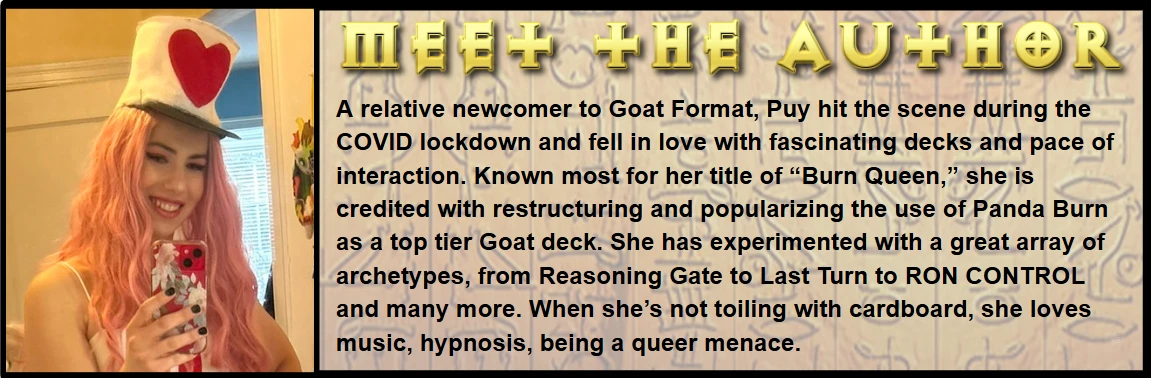
For those who don’t know me, I am Puy. I played Goat Format competitively from 2020 to 2024, boasting two PWCQ wins and quite a few tops, from locals to a GGPs all the way up to two GFCs. Almost all of these were done with unique/underrepresented decks. Though I have by and large stepped away from competitive Goat Format, I do still enjoy this lottery simulator disguised as a game from time to time.Now that you know who I am, let’s talk about sideboarding.Sideboarding (also known as side decking or simply “siding”) is a foundational component of Goat Format, Yu-Gi-Oh, and any trading card game. It is one of the most difficult skills to master at a competitive level, but nonetheless one of the most important! However, Goat Format’s static card pool and decades of development and data make it a uniquely known field for siding. Successful siding in Goat Format is more of a science than an art, and today I’d like to show you my theory on what that scientific formula is.

This article is for any competitive Goat Format player who wishes to have a better understanding of siding in Goats. It may be better suited to intermediate and advanced players, but anyone is welcome to read. I highly recommend beginners read this once, play a tournament or two, and return again. We’ll begin with foundational assumptions of all TCG sideboarding, move on to my foundational assumptions of siding in Goat Format specifically, and lastly I will outline my methodology for creating and tuning a sideboard. By the end of this article, you’ll have a much more precise way to know what should go in that dreaded 15th slot and beyond.Since the first trading card game, Magic: The Gathering, almost any serious TCG has had a reserve of ~15 cards players can use to switch out with their main deck between games in a match. We have a great well of knowledge about how to best use this mechanic spanning back decades and across multiple games. The following are some fundamental assumptions I carry into siding. You may know some of them, but I encourage you to review them anyway!
The Fundamental Assumptions of Siding
Over time, you will play more games sided than not sided.
Game one is mainboard only, but after that your games two and three (maybe even four and five) will have access to the sideboard. That means by and large the sideboard is MORE important than the mainboard. A very well-built main deck with a terrible sideboard will likely beat a terrible main deck with a great sideboard in game one, but who do you think is winning the next two games?Also, in one of those games, you will have to go second. Your sideboard options should reflect this fact, especially in a Goat Format. The “going first advantage” is very big in this format, and your side options can’t only be good going first.
The main goal of siding is to replace bad cards with good cards
And when I say “good” and “bad,” I’m not talking about objective power level. A card that is amazing in one matchup may be worse than useless in another. By the time we are done siding, we ideally want every threat and answer to play well into our opponents’ threats and answers. All the bad cards are hopefully gone. The challenge is to do this for every matchup. To meet this challenge, we move on to the third assumption:
Your main deck will be better geared for certain matchups than others
Every main deck will have certain forms of threats, interaction, and ways to win the game. They will be better suited against certain other threats and interactions than others. This means that every main deck’s sideboard will need to allocate different amounts of cards to best compensate for the remaining challenges.
Your chosen sideboard cards should work well within the context of your deck’s plan
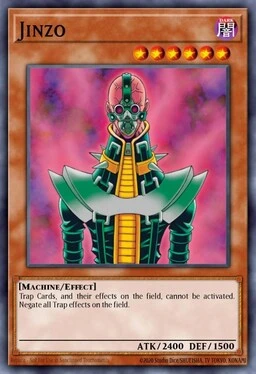
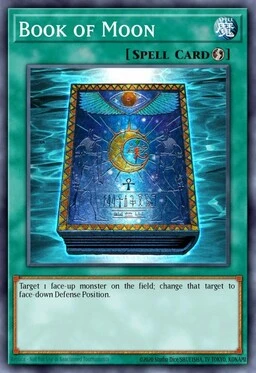
In addition to the granular concepts of types of threats and answers, every deck will have different engines, win cons, and axes of attack it values the most. An amazing answer when used by one deck may be absolutely impossible to deploy for another. A card may be too slow to deploy, be a redundant threat/answer, or even disrupt or “nonbo” with your deck’s plan. Just imagine how good Jinzo is when used by the trap-heavy Warrior deck versus the spell-heavy Reasoning Gate decks, or how much Book of Moon can do for warriors versus a flip-heavy Goat Control deck. You also need to consider…
You’re siding to play against your opponents’ sided decks
I don’t think we’re in game one anymore, Toto! Opponents will have seen a certain amount of your strategy and have their own plans on how to counter this. Any tools we bring in should not simply be snuffed by what they bring in. This is always worth thinking about, but rarely worth overthinking about. That generally ends in decision paralysis and a worse sideboard.For those new to Goat Format, or to any TCG, I recommend you go find your favorite deck’s sideboard and see what you would change now that you know these principles. This article will still be here when you get back. <3
Assumptions About Siding in Goat Format
Now that we have all that out of the way, we can get to the important and specific stuff. Because Goat is a static retro format, certain principles of the meta and needed siding tools are immutable (or at least not changing anytime soon). Let’s go ahead and outline those now, as these are key to our success.
“Transforming”/”Smokescreen” Sideboards Are No Longer a Viable Plan
This is certainly a hot take, especially coming from me. I made a name off of transforming sideboards and have always looked to amazing smokescreen players (Delinkquent, AlephYa2, Shane, Aldersoe) for inspiration. The sad truth is that things just aren’t like they used to be. A closed card pool means that once something has been done, it's been done. Furthermore, most online Goat tournaments (i.e., most Goat tournaments) have open replay policies because scraper bots had to ruin all the fun. Without their surprise factor, transforming sides are almost always a worse plan than actually siding your deck by matchup. If people are interested, I may write more about transforming sides in the future.
Static Answers Don’t Stay on the Field All That Long
Unfortunately, the excess spell/trap removal on most sideboards has made cards like Skill Drain, Royal Command, Royal Oppression, Bad Reaction to Simochi, and Mask of Restrict miss the mark almost every time. If I had a dollar every time I saw someone try one of these cards and take it out almost immediately, I’d be able to enter a GGP with the profits. To a lesser extent, this also goes for monsters. Goat has so many one-ofs that easily answer monsters that even decks not explicitly equipped to handle them still can.This is by no means a hard and fast rule. I have data to back it up. There may be exceptions, but my years playing short-term answers/removal have proven better than stun pieces.Speaking of exceptions, Royal Decree is a big one! This is because a resolved Decree cuts the amounts of usual cards that could answer it in half. Depending on the meta (refer to previous principles!), Decree might blindside people.
Priority of Options
Chaos Turbo is the Best Deck in Goat Format
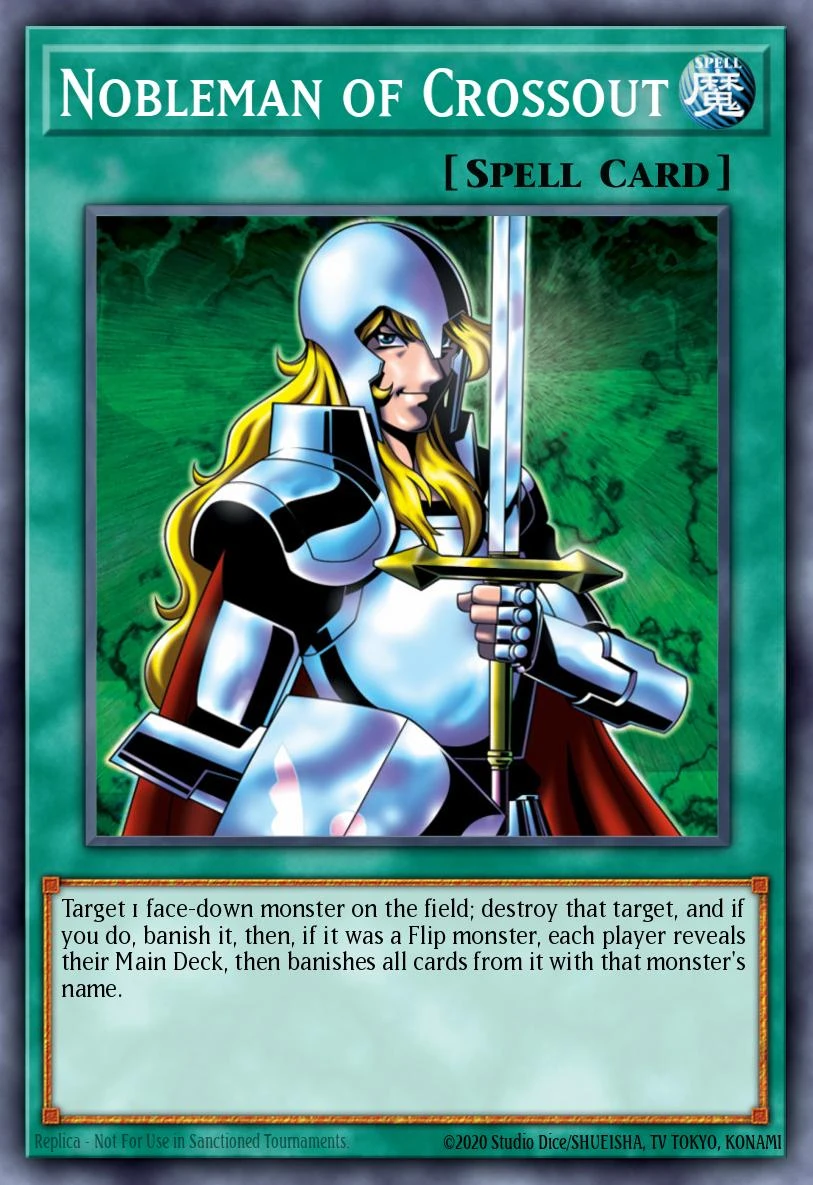
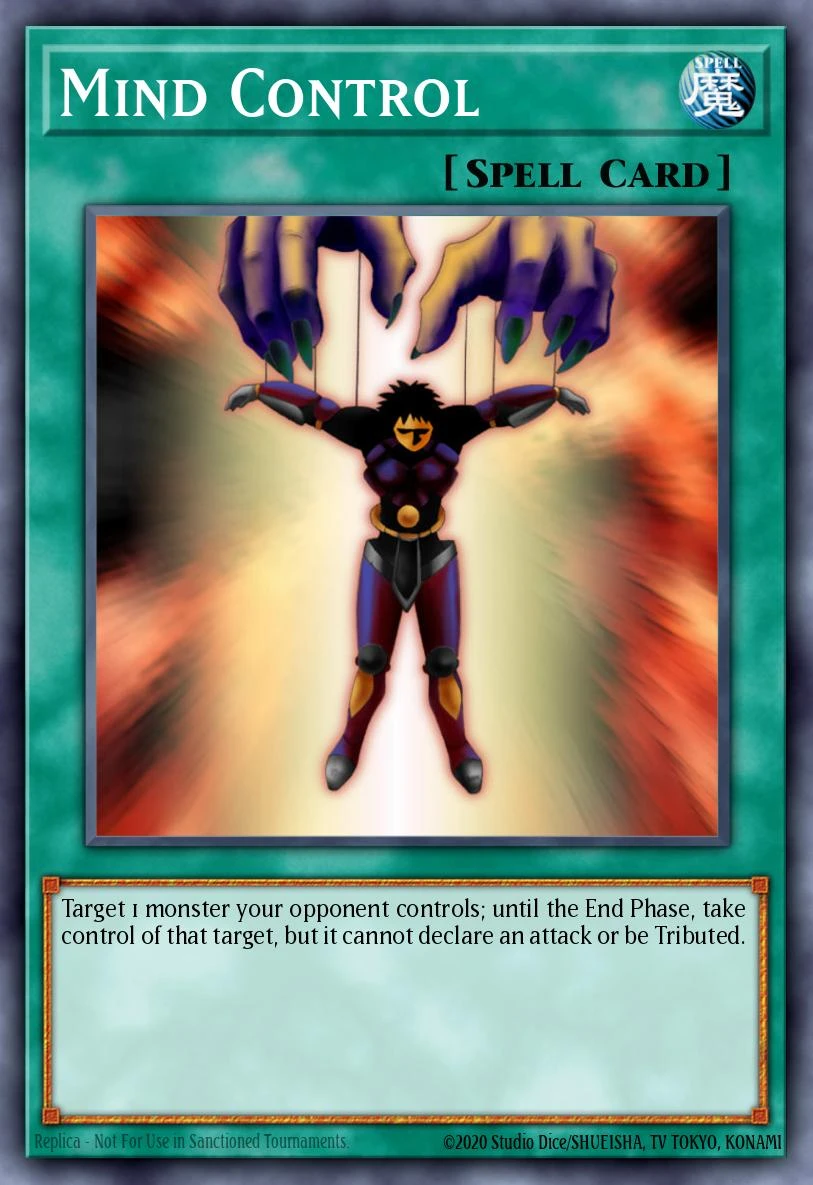
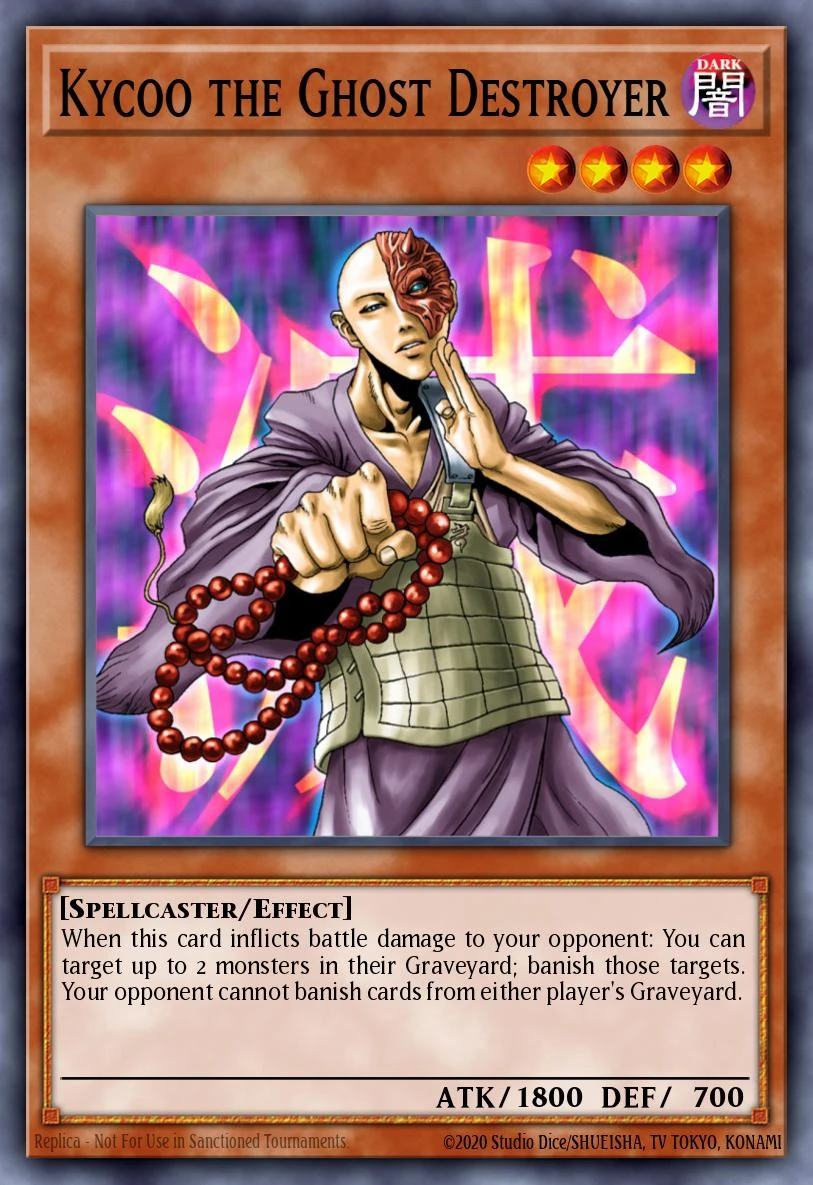
The debate is long dead. The only question left to be asked (and hopefully never answered) is how much better Chaos Turbo is than everything else. The other question to ask is what kind of Turbo is being played at a given time or event. Turbo goes in cycles of what tools are most used and why, and having a decent idea of these is important. What do the trap lineups currently look like? What are they siding against the most popular deck? What might they side against my deck? Chaos Turbo should have the least side slots, because at a competitive level your deck should ALWAYS have a good turbo matchup to justify playing. Mainboarding against turbo with cards like Nobleman of Crossout, Mind Control, Dustshoot, and Kycoo may be appropriate depending on your deck, the meta, and the given event you’re to play in.
Aggro and Burn Will often Demand Considerable Changes to your Strategy
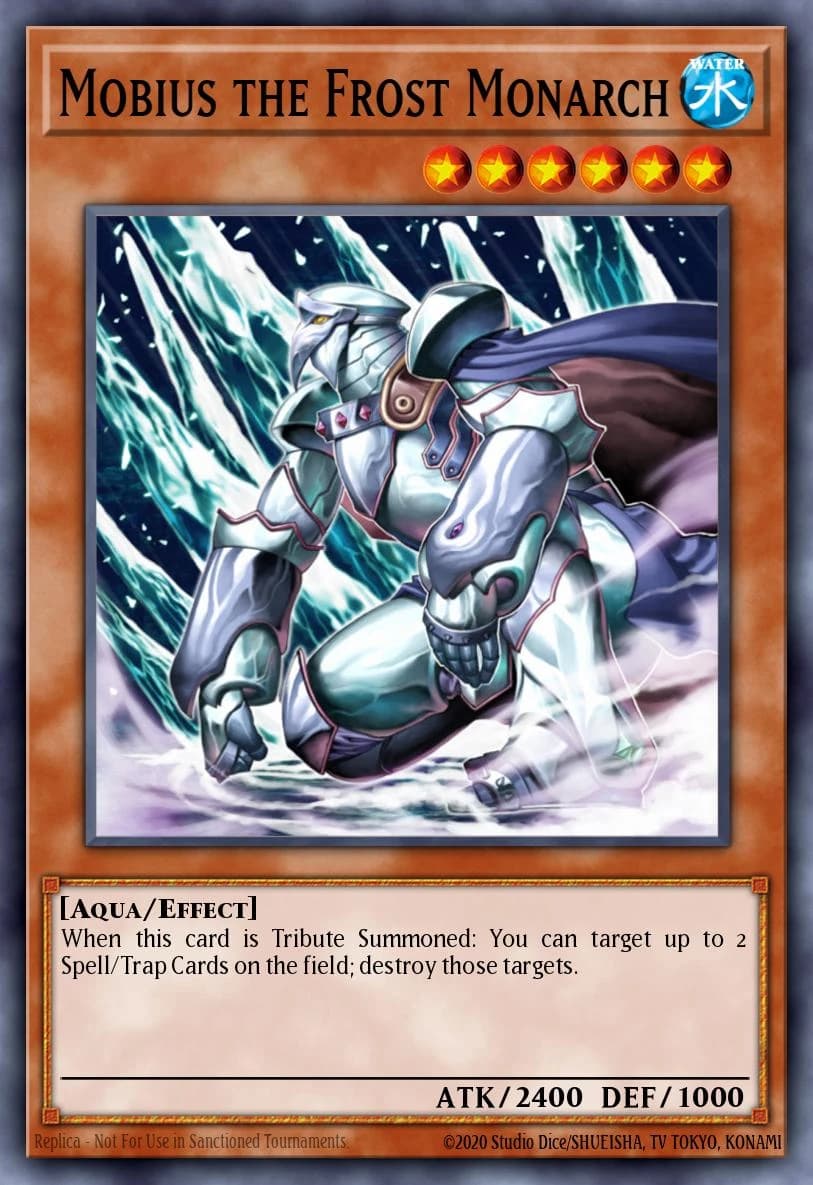
Cards amazing against Turbo and various control/midrange variants will be absolutely terrible against Warrior, Earth Aggro and Burn. You WILL see one of these almost every event. Two of these decks are fast and punish synergy. The third is inevitable and punishes players’ frivolous tendencies to trade life for card advantage.Fortunately, they do have two commonalities that we can consider for siding: They both don’t generate direct card advantage, and they both cherish their back row. This means Sufficient backrow removal is a must. This will cover all sorts of matchups, but these two especially. Dust Tornado, Mobius, Jinzo, and even Giant Trunade are all great options. Remember: Pick the backrow removal that best compliments your strategy. Can you easily summon Mobius/Jinzo? Do you make good use of giant Trunade even though it’s a -1? Take time and consider.
Warrior and Earth Aggro simplify the gamestate and try to gain advantage through attacks. Denying attacking through floodgates, battle traps, and monsters they cannot simply attack over (especially ATK position, high ATK monsters) deny them this advantage. Burn decks, on the other hand, often use the time and inevitability granted by floodgates and Ojama locks over card advantage. In both cases, going down card advantage is FINE provided they are in a worse position than you and you can recoup it later. For burn, Mystik Wok and discard traps are great examples of this.
Control Decks Vary, but Goat/Meta Decks are a Constant
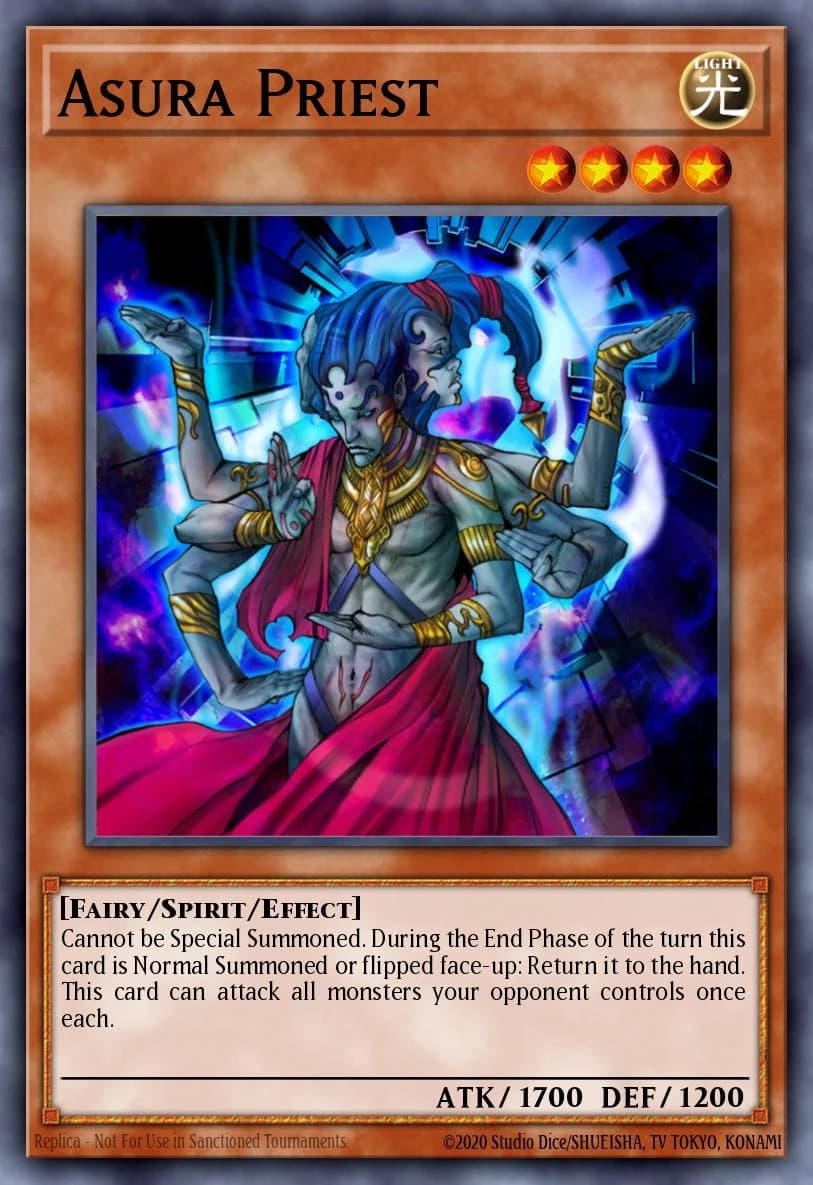
Another hot take: Goat/Meta = control, and more often than not thinking about it any further is a waste of time and resources. Against Scapegoat you want sweeper cards such as Torrential Tribute and Tribe-Infecting Virus (which you are probably already playing mainboard), Asura Priest, King Tiger Wanghu, Lightning Vortex, etc. Answers for Thousand-Eyes Restrict are also a must. Some decks will have sufficient answers to it already (remember those foundational principles!), but others may benefit from Book of Moon or Tsukuyomi. This is especially true if you expect the control deck to play Decree, as this will deny you more standard
answers. Removing decree should be a tertiary priority of dealing with control decks, and again depends more on the meta. Without Scapegoat and Metamorphosis, the game moves at your pace. Most control decks cannot apply good aggressive pressure even against the emptiest of boards. It is okay for your anti-control cards to be slower to deploy.
Trunade Decks will just Kill You if You’re not Prepared
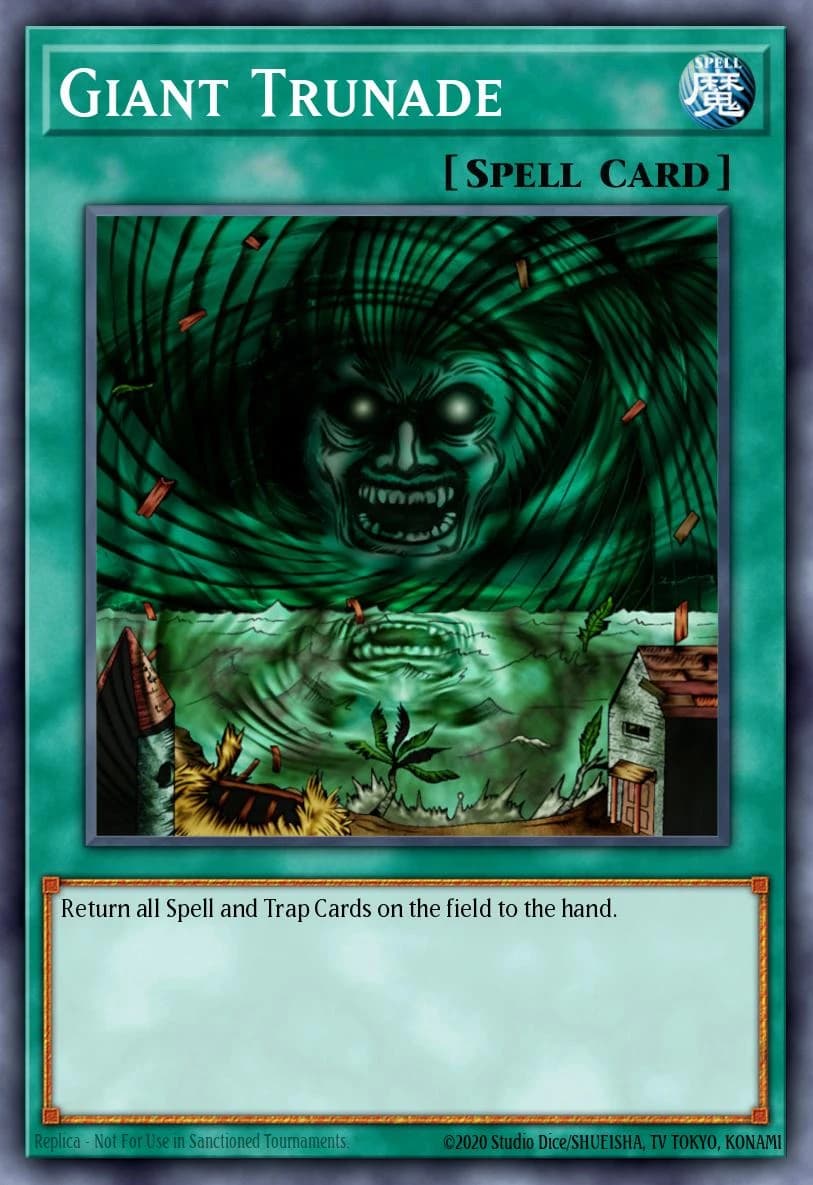
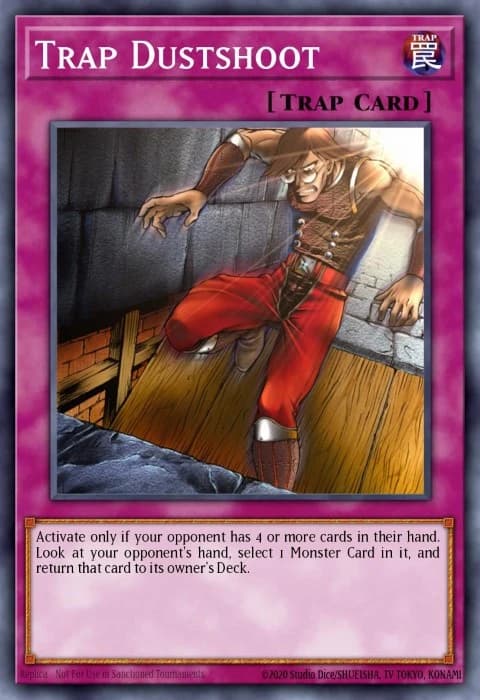
And they are common enough that I think they are always worth your consideration. Common suspects include Cyber Stein, Reasoning Gate Turbo (RGT), and my precious Rescue Cat. Turbo has a strange weakness to “Giant Trunade, remove your set monster, kill you” that makes these decks always viable in the right hands. Against these decks, speed of deployment and defense matter more than card advantage. Ask yourself “when my opponent plays Trunade, how am I going to not die?” and side accordingly. Threatening Roar? Hallowed Life Barrier? Floodgates + Solemn Judgement? Trap Dustshoot is also great for taking away a key card from most combos.
It’s especially devastating if you chain it to their Trunade, getting you safely back to your turn to set everything else again. Whatever your answer is, it has to be usable by turn 1. From there, it is up to you to follow the principles and figure out how to beat the rest of the deck. All this being said…
Non-OTK Combo Decks are NOT worth Siding Against
And this one also stings coming from me. The truth of the matter is that all of Goat’s alt-win decks are interactable using traditional cards (Solemn, Dustshoot, Break, Book of Moon etc). This list includes Empty Jar (but not RON CONTROL), Last Turn, Library FTK, and THE GUN (Economics FTK). I suggest you become familiar with all of them, especially which interactions are key to their victory.
Summary
So to sum it all up, here is my recommended order of priorities when creating a sideboard:
- Assure your mainboard is well-positioned against turbo (banishing graveyard, interacting with facedowns well, dustshoot, etc) and side minimally against it to seal the deal. Also know how it will side against you and plan accordingly.
- Plan most for your Warrior/Earth and Burn matchup. Spell/Trap Removal is a must and then focus on stopping attacks and Ojama tokens.
- Plan what you will do against Goat/Meta decks.
- Plan for Trunade OTK decks.
- Plan for non-OTK combo decks and other weirdness you think you may be weak to.