Goat Format is a Buy
This article argues that Goat Format cards are a superior long-term investment compared to most other trading card game options due to Konami's control over supply and demand, and the format's stable, non-speculative nature.


A little known fact about me is that I came very close to working as an analyst at an investment bank. While I’m no multi-billion dollar hedge-fund manager, I have a lot of “common sense knowledge” that eludes many retail investors, and certainly most Yu-Gi-Oh! players. A lot of Yu-Gi-Oh! players worry about whether the cards that they purchase will depreciate in value in the near future. This is for good reason; most of them do. Let’s start this article off with the obligatory, “Trading cards aren’t a good investment, but…” If you were looking to put your money into some speculative pieces of cardboard with a long-term investment horizon, Goat Format cards are clearly superior to virtually all other options available. I will outline why this is the case.
Why TCGs Are Usually a Bad Investment
Despite what certain Yugitube personalities might tell you, TCGs are about the worst vehicle that you could possibly park your money into. Yes, worse than oil, precious metals, cryptocurrency, and even worse than shares of Tesla. Watching Yu-Gi-Oh! prices fluctuate wildly can be fun, much in the way that reading horoscopes can be fun. This doesn’t mean that it’s a good idea to take them seriously. Generally speaking, makers of TCGs do not have incentive to keep card prices high. In fact, the opposite is probably true. In the era of digital TCGs that take advantage of lower production costs to offer a free-to-play + microtransactions experience, no one wants to tell their potential customers that their cards are rising in price every year. No one starts playing a game because it’s an investment; they do it to have fun. People want entertainment at a reasonable price, and Konami’s target demographic does not have a lot of money to spend on their hobbies. The price of any asset is controlled by supply and demand, and Konami has perfect control over supply of any card and a strong influence over demand. They can reprint or ban any card at will. They can nerf the deck that the card goes into. They can power-creep the card out of playability. They often do all of the above. Investing in any particular card for the long-term more or less requires you to be some sort of psychic that knows which particular card is going to be the weird exception to the rule that, “Every money card eventually gets reprinted, nerfed, or power-crept back down to Earth.” This is not to say that markets are always perfectly rational and short-term gains cannot be found. When Pot of Desires was first printed as a secret rare in The Dark Illusion, it was clearly undervalued to anyone who had a decent sense of card evaluation. It debuted at a price tag of about $40, and I told The Game Academy that it would be in their best interest to stockpile them at that price. By a few months later it had roughly doubled in value. The problem though was that Pot of Desires became a victim of its own success. Konami reprinted it multiple times to further cash in on its popularity, and now the secret rare version is worth just $20. Anyone who invested in the card for the long-term got crushed.
Why Goat Format is Different
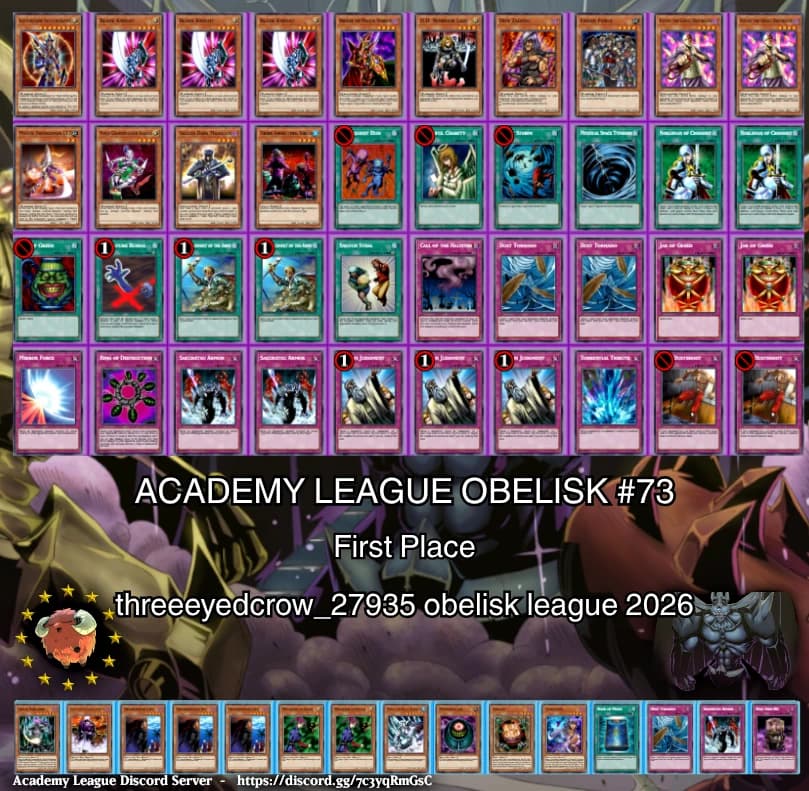
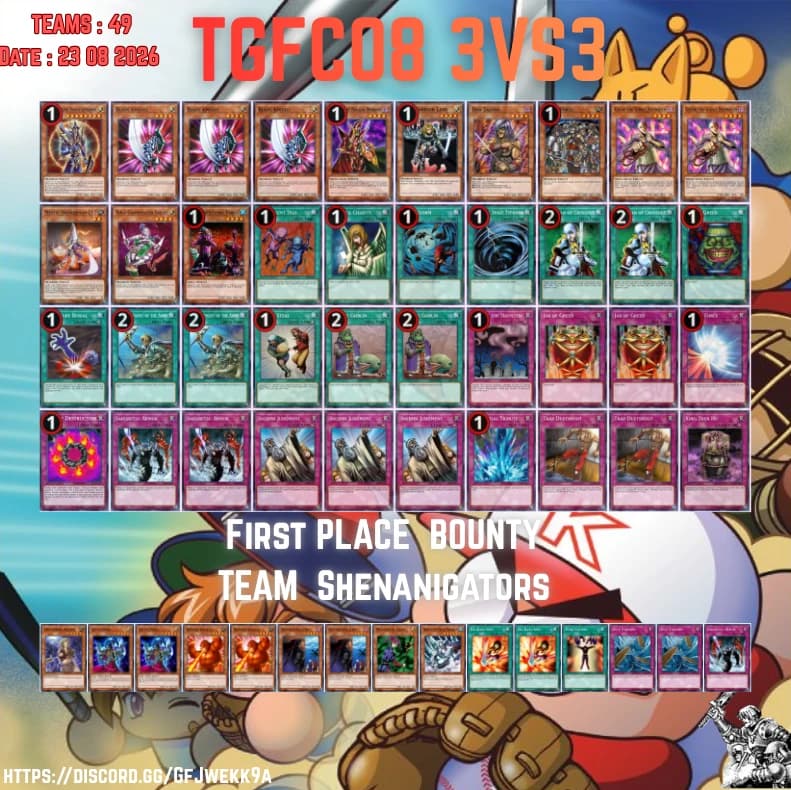
Goat Format is virtually the opposite of current format Yu-Gi-Oh! in terms of value depreciation. Had you bought almost any possible Goat Format deck at any point in time, it would be worth more money today than it was you bought it. In addition, prices are much less volatile. Current format Yu-Gi-Oh! prices are very news-driven. One ban list, YCS decklist, or reprint announcement can make markets go crazy overnight. Goat Format has no banlists, no tournaments significant enough to influence prices, and few reprints. It’s very difficult for prices to drop very much. Part of this is because of the fact that many of the prices are already near rock-bottom levels. Konami could print a million more copies of Dust Tornado, and current holders of Dust Tornado would barely even notice. This is really a double-whammy of value to new Goat Format players. If you’re thinking about Getting Into Goat Format, decks are about as cheap as they could possibly be. If the prices of your cards do change in value, it will probably be upwards rather than downwards. It’s extremely unlikely that your $50 Goat Format deck will ever be worth $10, but it might someday be worth $100. Why is this? It’s because of demand-side factors.
Goat Format Has More Upside Potential
Supply of Goat Format cards is virtually guaranteed to be stable due to Konami’s lack of interest in Goat Format. There are no massive news events that cause demand for any particular card to shoot up or down. What causes price moments then? Mostly just overall demand for the format. As you read about in my State of GoatFormat.com, overall interest in the format is creeping upwards. Our web traffic analysis indicates that there are far more Goat Format beginners just getting their feet wet than there are experienced players. Even though interest in Goat Format is trending upwards, it is almost certainly not at a peak. It has far more room to run. There are hundreds of people everyday searching for terms like “goat format,” “goat format ban list,” “goat format card pool,” and so on. What happens if we can turn even just 10% of these interested people into committed players? Introduce more players to the format, and your cards will go up in value. Then they can do the same. Does that sound like a pyramid scheme? Hell yeah it does, but we are nowhere near the point at which we’ve run out of people to introduce to the format. Anyone reading this in 2019 or 2020 is certainly at the top of pyramid, not the bottom.
Goat Format Price History
It’s easy for some guy on the internet to say, “Goat Format cards are rising in value,” but where’s the evidence? I’ve documented the prices of five high-end cards ($40+) and five mid-end cards ($3 to $40) to show how you would have fared if you had bought into Goat Format a couple of years ago. These examples are not cherry-picked; you can look up other cards for yourself and see similar results. All of these prices are taken from the “market price” listed on TCGplayer, using whatever web.archive.org data is available to show what prices were in the past (prices rounded to the nearest dollar). Note that TCGplayer market prices tend to be underestimates of present value, so in many cases, the return on investment was actually greater than what is listed below.
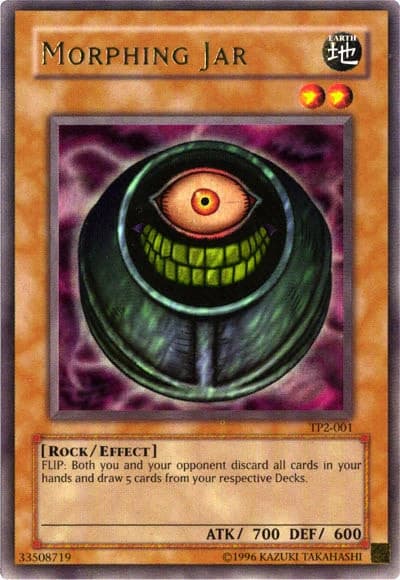
Morphing Jar (Ultra Rare, TP2-001) October 2017 Price: $500 May 2019 Price: $552 Annualized Return: +6.45%
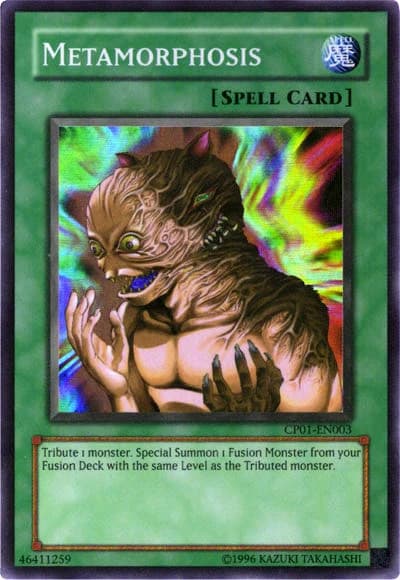
Metamorphosis (Super Rare, CP01-EN003) July 2017 Price: $101 May 2019 Price: $275 Annualized Return: +72.70%
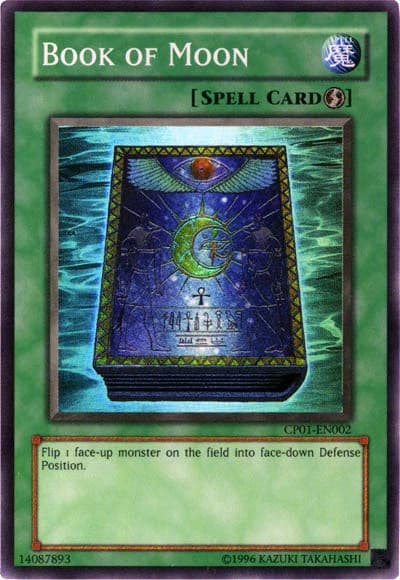
Book of Moon (Super Rare, CP01-EN002) July 2017 Price: $153 May 2019 Price: $215 Annualized Return: +20.39%
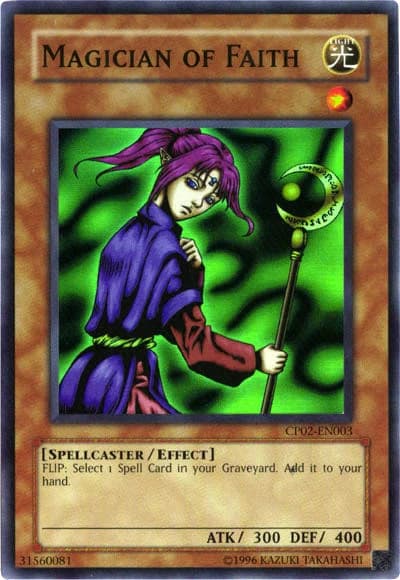
Magician of Faith (Super Rare, CP02-EN003) June 2017 Price: $62 May 2019 Price: $101 Annualized Return: +29.00%
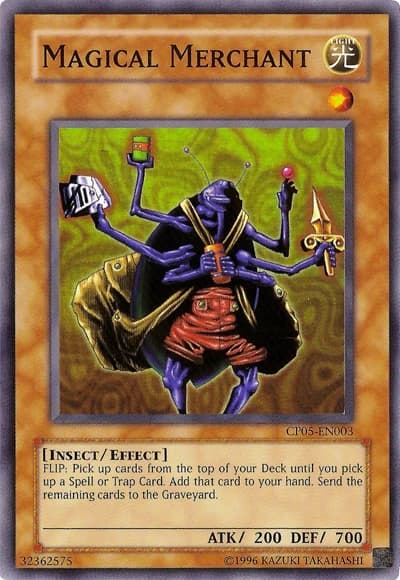
Magical Merchant (Super Rare, CP05-EN003) October 2017 Price: $38 May 2019 Price: $65 Annualized Return: +40.36%
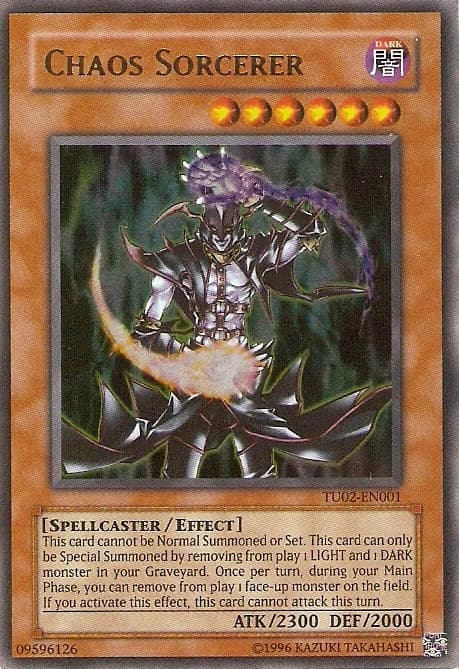
Chaos Sorcerer (Ultra Rare, TU02-EN001) September 2017 Price: $23 May 2019 Price: $26 Annualized Return: +7.63%
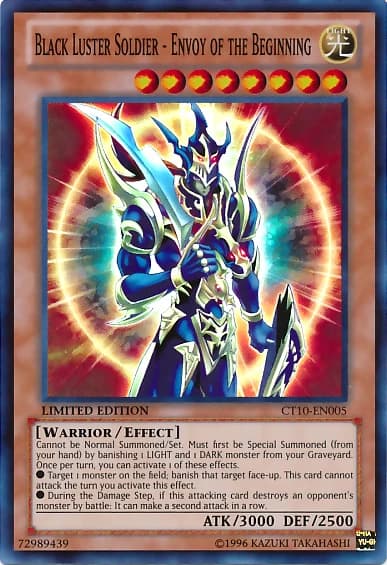
Black Luster Soldier - Envoy of the Beginning (Super Rare, CT10-EN005) October 2017 Price: $5 May 2019 Price: $9 Annualized Return: +44.95%
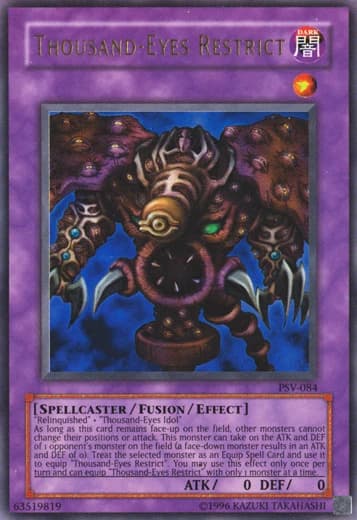
Thousand-Eyes Restrict (Ultra Rare, PSV-084) October 2017 Price: $5 May 2019 Price: $8 Annualized Return: +34.56%
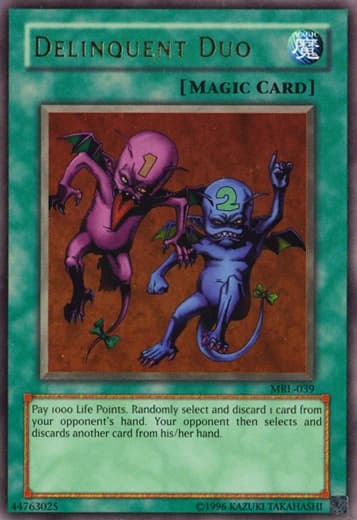
Delinquent Duo (Ultra Rare, MRL-039) October 2017: $16 May 2019 Price: $5 Annualized Return: −52.03%
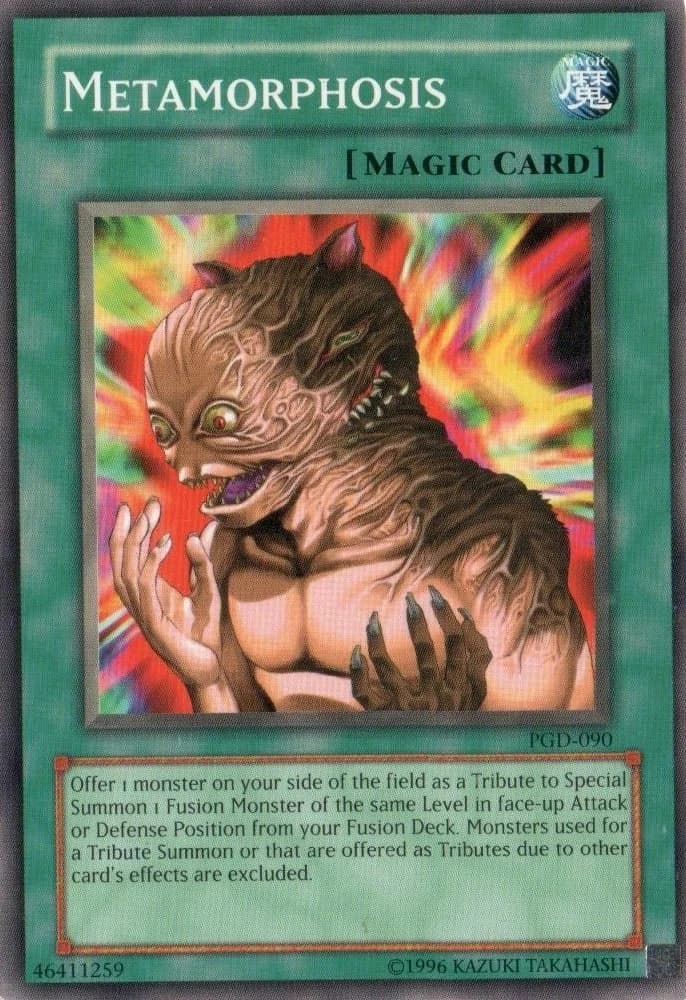
Metamorphosis (Common, PGD-090) October 2017 Price: $4 May 2019 Price: $4 Annualized Return: +0.00%
You Can Rest Easy at Night
I’m not trying to say that you should pile your life savings into Goat Format cards. As the saying goes, “Past performance is not indicative of future results.” This is really just the icing on the cake as far as Why You Should Play Goat Format. Your goal when buying into a game should not be to make money, but it’s certainly nice to know that you’re unlikely to lose any. However, it is clear that Goat Format cards have been steadily rising in value and that this trend can continue if more players continue to jump into the format. Because of all of these factors, I rate Goat Format a “Buy.” If you are on the fence about buying a Goat Format deck, I would recommend doing so now rather than waiting until later. Stay smart kids, and I’ll see you all in my Lambo.
You might also like...
If you're new to Goat Format and want to read more about its history and why its so popular, then check out What is Goat Format?, Why Should I Play Goat Format?, and Getting Into Goats.
ACP
ACP is a co-founder of GoatFormat.com, along with Skully. He has been an active contributor to the revival of Yu-Gi-Oh!'s Goat Format from 2012 onward. In 2017, he created the Angel Chaos deck, a notable contender in the Goat Format metagame. He has a long history of being a TCG content creator, first for The Game Academy (now defunct) and later for GatheringMagic.com. He has placed in the top32 of the Yu-Gi-Oh! Championship Series three times. A mathematician by profession, he is known for his logical and analytical approach to gaming.